

FREE FOR SUBSCRIBERS
The Inquiry Project Resource Library
Select a category below to jump straight to what you need or scroll to browse the full collection.
The Meta-Curiosity Strategy Wheel

The Meta-Curiosity Strategy Wheel is a practical, metacognitive framework that helps teachers intentionally cultivate, capture and channel curiosity across an inquiry cycle: supporting learners to notice their thinking, activate prior knowledge, investigate deeply, deepen understanding, make purposeful choices and reflect on how their thinking grows. At the centre are the intentional thinking moves within the inquiry process: the types of thinking we want learners to develop, strengthen and become increasingly aware of over time. The middle layer shows what this thinking could look like in classrooms, highlighting pedagogy in action and the intentional teaching moves that support learners to engage deeply, make meaning and reflect metacognitively on their learning. The outer layer brings together thinking routines and practical strategies that teachers can draw upon to strengthen, extend and make student thinking visible. These tools are not designed to be used at random, but selected intentionally to align with the type of thinking being explicitly cultivated throughout the inquiry process. The framework supports teachers to select and sequence routines with purpose, aligning thinking, pedagogy and strategies to cultivate, capture and channel curiosity and metacognition. It was created in response to a growing need for tangible, classroom-ready tools that help educators intentionally design for curiosity, meaning-making and purposeful action. The framework overview PDF is available as a free resource (subscribe to left) with a full suite of editable routines, strategies and supporting materials accessible through our new online Teacher Hub (see Members Resource Hub).
This framework overview PDF is available as a free resource with a full suite of editable routines, strategies and supporting materials accessible through our Members Resource Hub
🧠 Metacognition & Thinking Routines
.jpg)
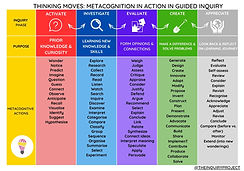
Metacognition In Action Verbs
Naming thinking supports learning growth by giving students a language to recognise, describe and reflect on their own cognitive processes. When learners can identify the kind of thinking they are engaging in, they are better able to monitor their understanding, make intentional choices and transfer strategies across different contexts. As part of my work with schools, I have recently adapted a continuum of action-oriented thinking verbs and mapped them alongside an Inquiry process to support greater clarity, intentionality and progression in learning. My hope is that this tool empowers learners to develop stronger agency by making thinking visible, encouraging deeper reflection and strengthening metacognitive awareness throughout the learning journey.

Think-Pair-Share
One of the most commonly thinking routines used in classrooms, but do we rush it and not give enough consideration to scaffolding the conversion. THINK: The children are invited to firstly stop and take some time to think about their own personal thoughts and feelings. This should if possibly be noted down, ready to share. This step is vital in helping learners to consider new learnings and what it means to them. PAIR: Children are invited to listen to one another and understand their perspective. SHARE: The children are invited to then consider the different viewpoints and create a response that is shared by both learners. This may or may not be different from their own initial response.

Curiosity Kickstarters
A practical collection of 24 ready-to-use thinking routines designed to spark curiosity, deepen thinking and launch rich learning across any year level or curriculum area. Organised into four key categories - Notice & Wonder, Prediction & Possibility, Question Generators, and Perspective & Challenge - these simple, low-preparation strategies help students observe closely, ask better questions, think critically and explore ideas from multiple perspectives. Each routine includes a clear learning intention, step-by-step instructions, teacher prompts and success criteria, making them easy to implement in any classroom. Designed to be flexible and adaptable across learning areas, these routines encourage rich discussion, strengthen critical and creative thinking, and help build a classroom culture where curiosity drives learning.
.jpg)
Cost Benefit Analysis
A Cost-Benefit Analysis is a decision-making tool used to compare the potential costs and benefits of a particular idea, action or solution. This strategy supports learners to critically analyse their ideas for taking action in Inquiry, considering factors such as feasibility, impact, risks and potential outcomes before making informed decisions.

Thin & Thick Questions
The ‘think or thick’ question tool is one of my new favourites. Post it notes on paper are always my preference but sometimes online templates and Jamboards can be great for older kids too. I’ve created this one in Canva for you to use! Use it as a template or a background in Jamboards, edit to your heart’s content!

Spark, Shift, Steer Routine
Spark, Shift, Steer is a simple feedback routine designed to encourage reflection, conversation and action. It moves feedback beyond what we simply liked or didn’t like and instead focuses attention on what we can learn from one another and where we might go next. SPARK captures the ideas, practices or possibilities that have sparked our thinking, inspired us or made us curious. SHIFT invites us to consider what we might change, rethink, adapt or develop in our own practice as a result of what we have seen or heard. STEER helps us identify where we might head next, turning reflection into clear actions and possibilities for moving learning forward. The routine creates a balance between celebrating what is working, identifying opportunities for growth and turning reflection into meaningful next steps.

Feedback: Kind, Specific, Helpful
Effective feedback is a powerful link between assessment and learning, with research showing it can significantly accelerate student growth. High-quality feedback helps improve learning outcomes and support all learners to progress. Rather than praising intelligence alone, effective feedback identifies next steps, addresses gaps in understanding and guides learners forward. Feedback is most effective when it is kind, specific and helpful. This anchor chart provides educators and students with prompts and sentence starters to scaffold meaningful feedback conversations and support a culture of growth and continuous improvement.

Knowing the Zone: Designing Assessment with purpose
Drawing inspiration from Eduardo Briceño (2016), this resource unpacks how through a consideration of both the Learning Zone (for practice and growth) and the Performance Zone (for showing achievement) we can ensure that assessment compliments purpose. Embedding this practice helps students feel safe to learn, take risks, and improve — while also feeling ready to show what they know when it matters most. This resource is aimed at supporting teachers when designing assessment tasks to ensure clarity of purpose, align feedback with learning goals, and create a balanced approach that values both improvement and achievement.
.jpg)
Nurturing Assessment Capable Learners
Drawing on the work of John Hattie, Dylan Wiliam and Eduardo Briceño this resource highlights key strategies for building classroom cultures and designing learning that promotes clarity, reflection, and confidence. The focus is on equipping learners with the skills to monitor their own progress, understand how to achieve success, and take greater ownership of their learning journey.

Sticky Thinking : Exit Tickets
Sticky Thinking is a collection of 24 ready-to-use exit ticket ideas designed to capture what clicked, connected and stuck for learners. Organised across four areas: Checking for Understanding, Reflection & Metacognition, Application & Transfer, and Wonderings & Next Steps, these quick prompts help teachers gather useful evidence of learning while encouraging students to reflect, make connections and identify where their thinking might go next. A practical resource to keep on hand when you need a quick way to finish a lesson and make thinking visible.
📚 Curriculum Planning
_pdf%20(2).jpg)
Planning Powerful
Provocations
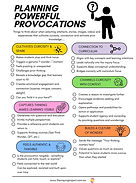
Planning Powerful Provocations is a practical checklist designed to support teachers in intentionally selecting artefacts, images, stories, videos, and experiences that spark curiosity and deepen learning. Grounded in the Cultivate, Capture, Channel framework, this tool helps educators move beyond surface-level hooks to design provocations that ignite genuine wonder, make thinking visible, and connect meaningfully to curriculum. Use this checklist when planning units, launching inquiries, or refining learning experiences to ensure provocations are purposeful, authentic, and powerful, and ultimately shift student motivation from external pressure to internal drive.

One Pagers
One pagers are a powerful way for learners to organise and synthesise their thinking by summarising important ideas on a single page. They encourage students to identify key understandings, make connections between concepts and communicate their thinking in a clear and meaningful way, without becoming overwhelmed by too much information. Structured one pager templates can further support learners by helping them segment, sort and prioritise important takeaways within a clear framework. I’ve created a set of landscape templates that provide students with choice in how they visually represent their ideas, thinking and key messages. The addition of colour, symbols and images can help scaffold understanding, strengthen connections and support long-term memory. You can view and download my free set of one pager templates to print and use in your classroom via the link in bio. I’d love to see and hear how you use them with your learners!

Head, Heart, Hands Thinking
Before beginning a Guided Inquiry, one of the macro planning tools we use with teachers is Head, Heart and Hand thinking. This process helps educators uncover the curriculum beyond simply identifying standards and content descriptors. It encourages deeper conversations about the big ideas, concepts, dispositions and real-world connections we want learners to explore and develop throughout the inquiry journey. Rather than viewing curriculum as a checklist, this thinking routine supports teachers to consider what we want learners to know (Head), feel and value (Heart), and ultimately do or apply (Hand). It opens up possibilities for designing learning experiences that are meaningful, authentic and relevant to the lives of our children. This tool helps shape rich planning conversations before an inquiry begins. From there, we move into powerful provocations and thinking routines that cultivate curiosity and support students to generate their own questions, wonderings and pathways for inquiry around the big idea.

Inquiry Planning Resource to support metacognition, critical & creative thinking
This graphic has been developed to support educators in intentionally designing learning experiences that utilise metacognitive tools to strengthen critical and creative thinking throughout a Guided Inquiry process. By naming and making thinking visible, learners are better able to reflect on, articulate and regulate their cognitive processes, fostering greater agency and deeper understanding across the learning journey. While there are many models of Inquiry, this resource reflects our own language of thought while drawing inspiration from Kath Murdoch’s model of Inquiry (2023) and the 4eX2 Instructional Model (2007). The graphic highlights a range of routines and strategies that scaffold metacognition by helping educators intentionally cultivate, capture and channel thinking throughout the phases of Inquiry.

Vision for High Impact Teaching in Inquiry Learning
Inquiry Learning and Explicit Teaching are not competing pedagogies. Effective learning design requires educators to draw upon a range of approaches that honour both explicit instruction and the power of student voice, curiosity and agency. This visual highlights the importance of intentionally selecting and sequencing high-impact teaching strategies throughout the learning journey to strengthen curiosity, agency, and clarity of knowledge and skill. It encourages educators to use professional judgement when responding to learner needs, recognising when explicit teaching is required and when it is most powerful to listen and respond to students’ interests, wonderings and questions. Through purposeful planning, educators can create learning experiences that deepen understanding, strengthen the application of knowledge and support learners to become thoughtful, capable and curious thinkers.
✏️ Sketchnotes & Provocations

5 Ways to Dull Curiosity Sketchnote
This sketchnote explores five subtle ways curiosity can be dulled in learning environments and serves as a reminder that curiosity is not something extra. Designed to provoke reflection and conversation, this sketchnote is intended to support educators in thinking deeply about the learning environments they create and the messages learners receive about thinking, wondering and making meaning.

Curious about Concepts
Concepts can often seem invisible. Unlike facts, skills or content, they cannot always be seen or touched. They are, however, the big, important ideas that help learners make sense of what they know and connect understanding across different subjects and experiences. Provocations are particularly powerful when exploring concepts because they help learners recognise patterns, make connections across disciplines and transfer their understanding to new contexts. As Tania Lattanzio reminds us, "Without disciplines, understanding lacks depth. Without conceptual understanding, disciplines can remain isolated." This collection of provocations is designed to help learners see the concepts that often sit hidden beneath the surface of learning. Use them to launch an inquiry, spark a conversation and explore the big ideas that connect learning together.